How Transcranial Magnetic Stimulation Works
Learn what Transcranial Magnetic Stimulation is, how it works, and the protocols we use to help patients recover.
What is Transcranial Magnetic Stimulation?
Transcranial Magnetic Stimulation (TMS) is a non-invasive, FDA-cleared treatment that uses magnetic pulses to stimulate targeted brain regions. TMS is FDA-cleared for Major Depressive Disorder (MDD), Obsessive-Compulsive Disorder (OCD), smoking cessation, and migraine with aura. Research continues to explore its potential benefits for other neurological and psychiatric conditions, including anxiety disorders, chronic pain, fibromyalgia, tinnitus, traumatic brain injury, and substance use disorders.
FDA Cleared
In 2008 the FDA cleared TMS as a treatment to alleviate symptoms of medication resistant depression.
Drug Free
No medications are given during the procedure. There is no surgery and no injections.
Noninvasive
TMS is a technology that allows doctors to non-invasively stimulate the brain and reset it back into health.
Safe Procedure
The most common side effects are mild to moderate scalp discomfort and headaches.
How It Works
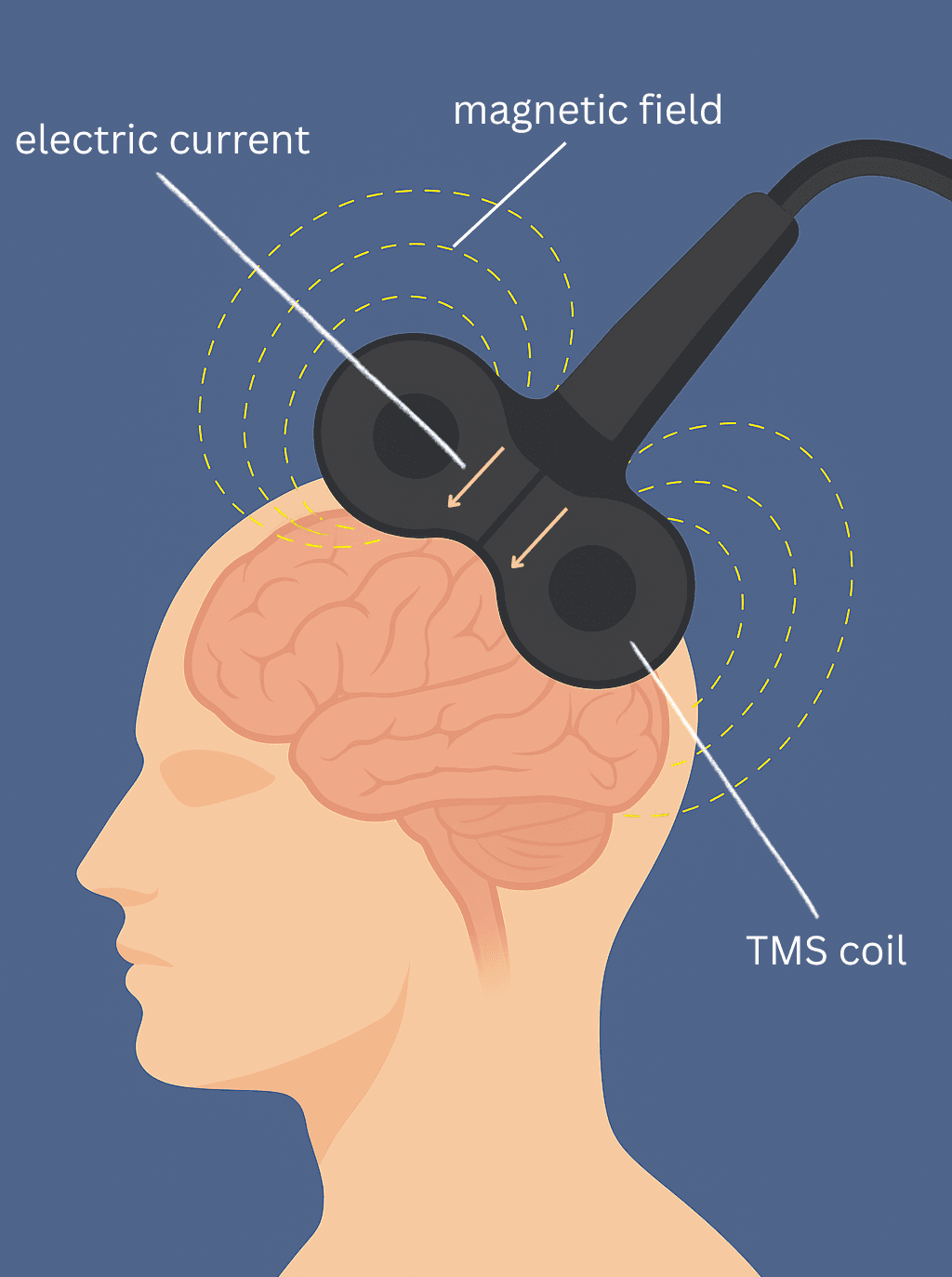
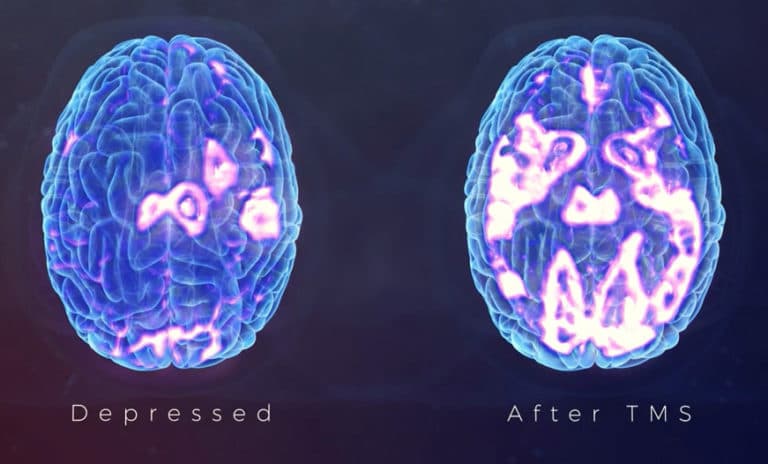
Transcranial Magnetic Stimulation (TMS) Therapy uses an electromagnetic coil to deliver pulses that stimulate underactive regions of the brain in patients with depression. These pulses penetrate about 2–3 centimeters beneath the coil, producing small electrical currents that activate neurons. This activity triggers the release of neurotransmitters and gradually helps reset brain connections, reducing depressive symptoms and supporting overall healing.
Our Approach to TMS Therapy
Our clinic specializes in the Accelerated, Intermittent Theta-Burst Protocol. Theta Burst Stimulation (TBS) is a subtype of TMS which uses short and high frequences of theta wave stimulation pulses. Theta Burst offers similar or greater effectiveness compared to rTMS with significantly shorter treatment times, requiring only a few minutes per session. Our clinic offers a series of 10 Theta-Burst sessions a day over the course of 5 days.
Pioneering Research
Brain Stimulation | March-April 2023
The Role of Transcranial Magnetic Stimulation in Treating Depression After Traumatic Brain Injury
Our own Dr. Harpreet Singh co-authored this retrospective study on using excitatory repetitive TMS (rTMS) to treat depression in 59 adults with Traumatic Brain Injury (TBI) or Post-Concussion Syndrome. The study targeted the left dorsolateral prefrontal cortex, a key area for mood regulation. Using standard depression scales (PHQ-9, HAM-D, and BDI-II), the research demonstrated that FDA-cleared TMS protocols led to significant reductions in depression severity with large effect sizes. The positive outcomes were consistent across different ages, sexes, and treatment durations. These findings strongly suggest that rTMS is a safe and effective treatment for managing post-concussion depression, reinforcing our commitment to providing evidence-based, innovative care.
Read the Full ArticleUnderstand the differences between traditional TMS, Thetaburst, and Accelerated Thetaburst protocols.
Traditional TMS
Treatment Duration
20-40 minutes per session
Total Sessions
20-36 sessions over 4-6 weeks
Protocol Details
Standard repetitive TMS (rTMS) using magnetic pulses targeting the dorsolateral prefrontal cortex.
Best For
Patients who prefer a gradual treatment approach with proven long-term outcomes
Since 2008
Thetaburst (Stanford Protocol)
Treatment Duration
Only 3-4 minutes per session, multiple sessions per day
Total Sessions
50 sessions over 5 days (10 sessions per day)
Protocol Details
Intermittent Theta-Burst Stimulation (iTBS) using short, high-frequency theta wave pulses.
Best For
Patients seeking a fast treatment option with minimal time commitment per session
Protocol of choice
Accelerated Thetaburst
Treatment Duration
3-4 minutes per session
Total Sessions
20 sessions in a single day
Protocol Details
Accelerated stimulation. May be combined with D-cycloserine to enhance neuroplasticity.
Best For
Patients seeking rapid symptom improvement and a condensed treatment schedule
Multiple clinical trials
Frequently Asked Questions
TMS may be a good fit if you are experiencing depression or another TMS-treatable condition and are looking for an effective, non-invasive alternative to medication.
No. TMS is non-invasive and requires no anesthesia or sedation. During treatment, you may feel a tapping or tingling sensation on your scalp. Most patients tolerate it well and are able to drive themselves home and resume normal activities right after each session.
Many patients begin to notice improvement within 2 to 4 weeks of starting treatment, though this varies by individual and by the specific protocol used. Your care team will track your symptoms throughout treatment to monitor progress.
It depends on the protocol. Traditional TMS sessions run about 20 to 40 minutes, while theta-burst sessions take only 3 to 4 minutes, though multiple sessions may be scheduled in a single day.
The most common side effects are mild scalp discomfort or headache during or shortly after treatment, which typically improve after the first few sessions. Serious side effects, such as seizures, are rare.